2025 - Contract UX Designer
Travis Perkins: Legacy System Transformation.
Background.
Joined Aria Intelligent Solutions as a freelance UX Designer (later: full-time, Founding Designer). First project: a price negotiation + scenario UI for Travis Perkins (TP), successfully rolled out across all UK stores.
Travis Perkins: 530 Stores, Two Flows.
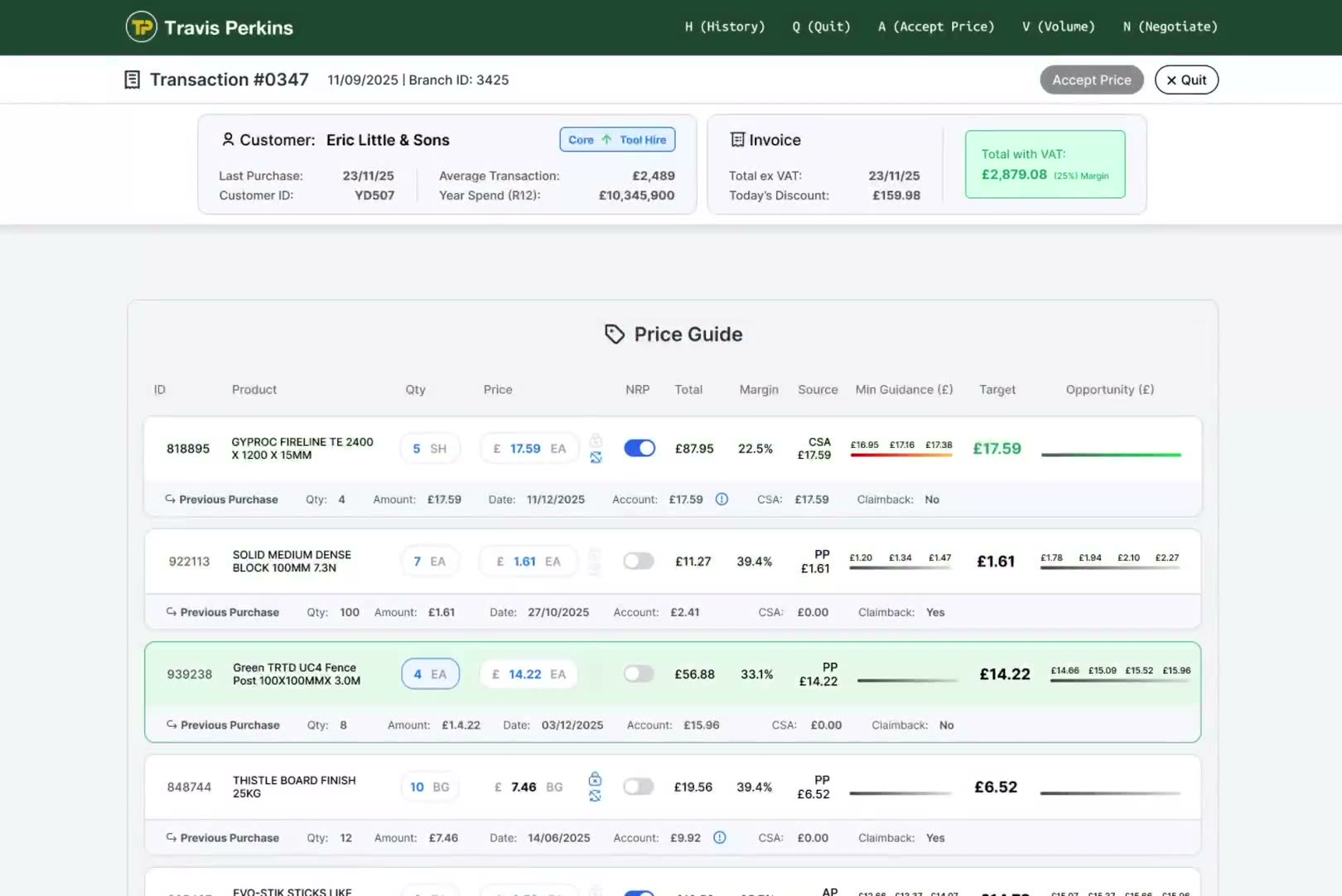
Joined Aria's pricing team to design a new pricing negotiation flow for Travis Perkins – a UK trade supplier serving professional builders across 530+ locations.
The brief: build a price negotiation guide flow employees could actually use – day one, with minimal training + a management access-only tool for oversight and control.
Price negotiation guide flow for employees below.
Price scenario tool flow.
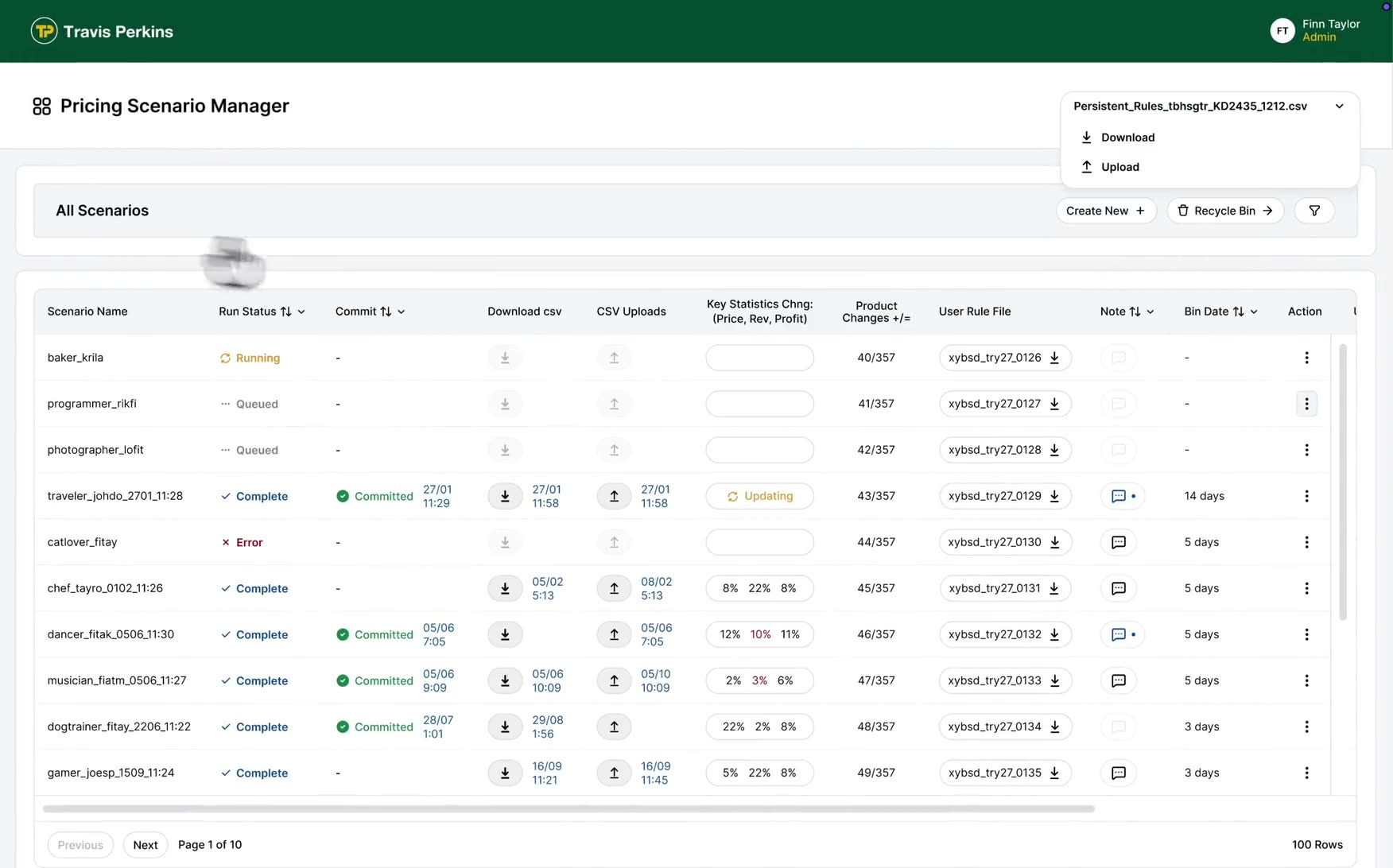
Management access-only tool for oversight and control, giving the ability to run pricing scenarios prior to implementation. (below)
The Problem.
A Deal-Breaker, Literally: Travis Perkins ran customers on negotiable bulk pricing – but leaving it to individual employees meant the price changed depending on who you asked. With billions in revenue on the line, the business needed one standardized tool that could roll out nationwide without slowing employees or customers down.
To tackle this, I wanted to keep in mind 3 threads that would shape the interface design direction decisions.
47-Year-Old System.
Travis Perkins ran stores on a 1978 in-house system – keyboard-only, older than most of its users. They'd tried matching that legacy look before and hated it: this screen needed to feel modern, even if nothing around it did.
The new UI system needed to standardize negotiation across 530+ stores, give staff a customized price recommendation, let management model and deploy pricing decisions before they go live, and do this all within their legacy environment.
See legacy below.
Respecting the Muscle Memory.
Built for a legacy, keyboard-only system from 1978 this design had to speak its language, not replace it. I wanted to implement 3 key factors into the flow:
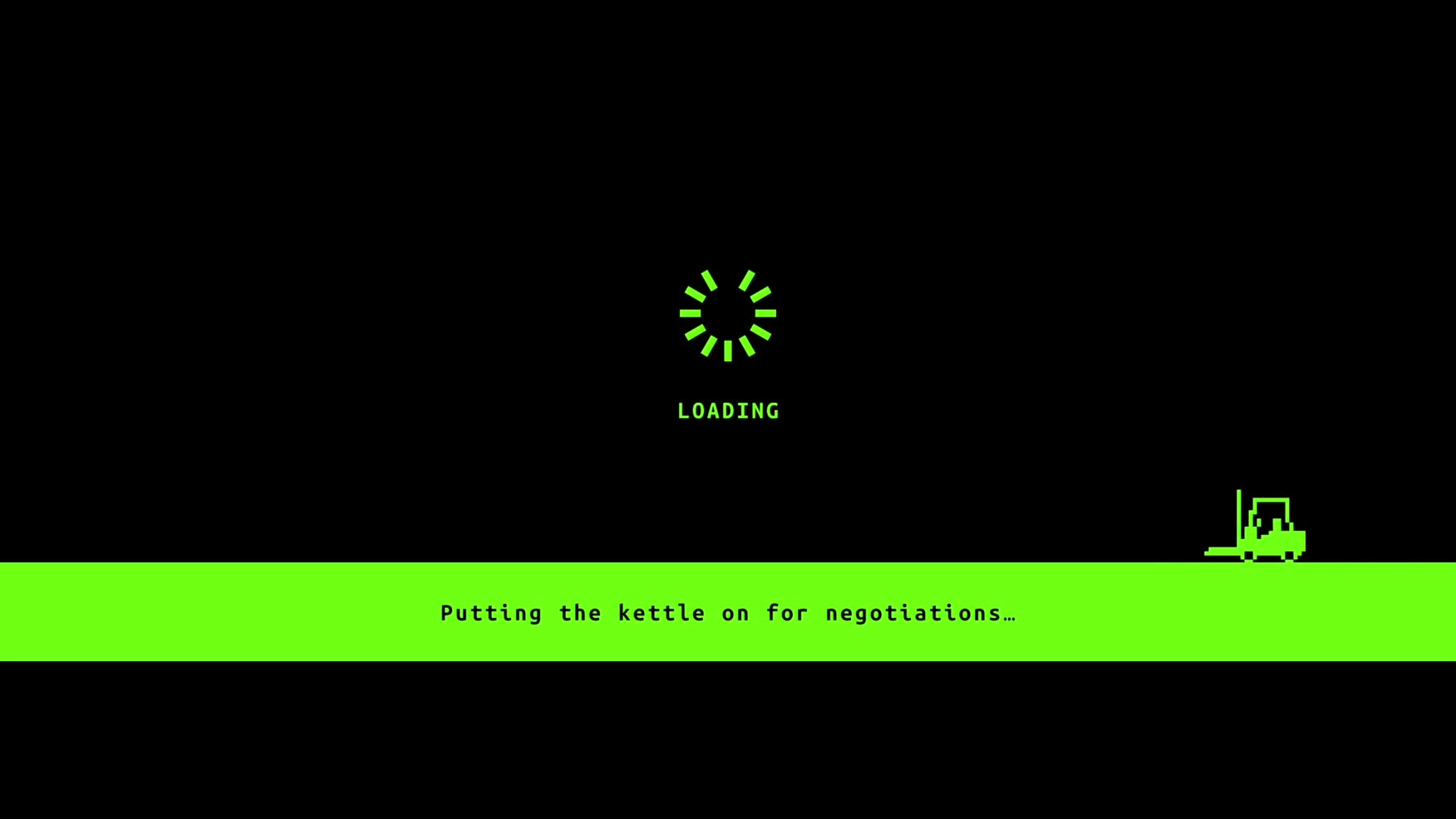
Bridging the Legacy Jump.
I wanted to make the transition between old and new screens feel intentional and not like a mistake - a transition screen to instill confidence felt like the best direction.
The Engine Behind the Price.
Where price negotiation is reactive to the customer, it all starts with optimization – surfacing the right price before anyone even opens the conversation.
In response to this we designed and built our "price scenario manager" flow – giving management the ability to run pricing scenarios prior to implementation, so they could better understand how to save lost revenue.
Outcome.
Shipped, Tested, Documented. 4 production-ready negotiation screen variants, 6 end-to-end negotiation flows, and 1 legacy-to-modern transition prototype. Plus a price optimization engine – scenario modeling screens, a commit/deploy flow, and rollout across 530+ branches – all built on 1 design system. Accessibility checked screen by screen with Stark before handoff.
- 530+UK Stores.Shipped to every branch, not a pilot.
- $2.1MAnnual Efficiency Savings.Bulk-item negotiation gains, estimated by the pricing team.
- 1970sLegacy Honored.Modern UI layered, not a rip-and-replace.